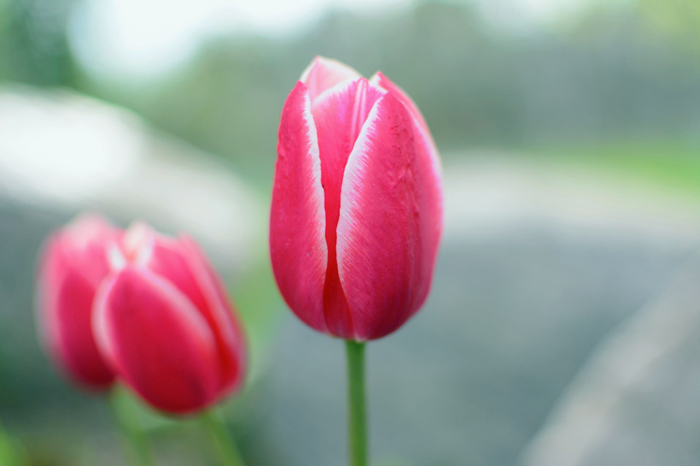
Jehovah was not in the wind. And after the wind, an earthquake: Jehovah was not in the earthquake.
And after the earthquake, a fire: Jehovah was not in the fire. And after the fire, a soft gentle voice. (1Kings 19:11-12)
Showing posts with label Home. Show all posts

Monday, September 4, 2017

Cultivating a Life-Long Love of Learning (Part 2) ~ Education is a Discipline


Admiral William H. McRaven delivered a commencement speech to over 8000 graduating students in 2014. Recently, a condensed video clip of his speech has been bouncing around social media.

You want to change the world? Admiral McRaven says you can do it by beginning with one small and simple task. He explains how each day of his six month basic Navy seal training began with an early morning inspection in the barracks. The mundane task he was required to perform was to be completed to perfection. Corners were to be square, covers pulled tight and pillow and blanket were to be neat and centred. The task he was to execute each morning: make his own bed.

And, now, this edited version of Admiral McRaven’s speech has been floating around the internet three years later and viewers are commenting that they need to go make their bed so they can bring change to the world.

Everyone is eager to change the world with the hope of making it better.


But, you have to wonder, how in the world, have we arrived at this place that a short motivational speech on a screen is inspiring adults to go make their bed. In part, this challenge is just one of twenty clever metaphors being employed to influence the listener to go out and make a difference.

But, the comments are telling. We have dropped the ball when it comes to completing simple and small tasks to perfection. We would rather accomplish great and noble things. Or maybe we just prefer to watch a five-minute video. How many of us begin each day with such a mundane task as making our bed?

Stop and think for a second, this task, although mundane and simple, is not insignificant.

It has been said, “Sow a thought and you reap an action; Sow an act and you reap a habit; Sow a habit and you reap a character . . . ”


If the formation of character is the aim of education, then it must begin with building on the proper foundation with the right instruments.

The first instrument of education, advocated by Charlotte Mason, a British educator at the turn of the twentieth century, is atmosphere.

The second instrument is discipline. As Charlotte Mason explained in her book, ‘A Philosophy of Education’:
 “By ‘education is a discipline,’ we mean the discipline of habits, formed definitely and thoughtfully, whether habits of mind or body.”
Charlotte Mason likened this instrument of education—this responsibility of parents—to the laying down of the rails for a train. Parents and teachers are to lay down lines of good habits on which the child is to run the course of his life.

Charlotte Mason supposed in her book ‘Home Education’:
 “This relation of habit to human life . . . is perhaps the most suggestive and helpful to the educator; for just as it is on the whole easier for the locomotive to pursue its way on the rails than to take a disastrous run off them, so it is easier for the child to follow lines of habit carefully laid down than to run off these lines at his peril.” (p. 109)
The habits sown in the child will reap the character of the adult. As parents and teachers we can permit or encourage habits that will either be life-depleting or life-giving.


The formation of life-giving habits has the power to raise a child beyond his or her nature without destroying his or her personality. Charlotte Mason maintained that children are born persons, created in the image of God, and every child has the potential to be a “person of infinite possibilities”. Yet, children are ignorant and need to grow in knowledge.

These life-giving habits are tools in the spiritual, physical, moral and intellectual development of the child in the realm of relationships with God, others and oneself.

This is not new thinking. The apostle Paul exhorted in his letter to the Philippians that this is a life-long learning and practicing. He wrote:
“ . . . whatever is true, whatever is honorable, whatever is just, whatever is pure, whatever is lovely, whatever is commendable, if there is any excellence, if there is anything worthy of praise, think about these things. What you have learned and received and heard and seen in me—practice these things, and the God of peace will be with you.” {Philippians 4:8-9}
The things we have learned—we need to practice these things. Lay down the rails and keep the train on the tracks.

The discipline of habits is vital in the education of a child. Like a three-legged stool, the formation of habits nurtures the child toward growth along with atmosphere and feeding the mind with living ideas.


How do we lay down these rails on which the child can live out his or her life? How do the parent and teacher use the discipline of habits to encourage growth and development of the body, mind, and soul?

We start small and we build up. Miss Mason pointed to the three of the most vital habits to be learned: obedience, truthfulness, and attention. And we move on to respect, thankfulness, kindness, neatness, mental effort, imagining, thinking and more and more. Focus on one habit at a time and keep watch over the habits that have been laid down. When one section of the track is laid well, build on to the lines of habit to allow the child to grow with healthy progress.

Next, we need to be diligent. This is a process that requires discipline in the life of the parent and teacher as much as the child. Pursue excellence in an atmosphere permeated with grace.

Furthermore, we motivate the child with living examples of real people in his or her life or in biographical stories. Paul referred to an old proverb when he wrote to the Corinthians: “Do not be deceived: ‘Bad company corrupts good character.’” The original Greek word translated ‘character’ suggests that character is based on or comes from habit.

Additionally, we must allow for natural consequences. To develop a healthy growth mindset, a child must come face to face with failure as well as successes.

Finally, it is essential we encourage rather than nag. Children need our loving affirmation, not false praise. Children need realistic expectations—not ones set too high or too low.


This is more than a metaphor in a motivational speech. It is wise to begin small by teaching a young child to make his or her bed, to pull the covers tight, to put their full attention to the task at hand. It is a simple thing, but not insignificant to lay down life-giving habits for a child to form the character of the man or woman he or she is becoming.

So tomorrow, when you wake up to a new day, be sure you sow one small habit—lay down another rail in the education of your child—to reap a great character. Do not miss this opportunity to be a living example and invest in the life of a child—a person with infinite possibilities.

Friday, August 25, 2017

Cultivating a Life-Long Love of Learning (Part 1) ~ Education is an Atmosphere


Suitcases are coming home from camps and summer holidays stuffed with smelly laundry and souvenirs. While backpacks are getting filled with bright new binders, crisp white paper, and coloured pens. We are trading long summer evenings with cooler nights as the crickets’ chorus of chirping plays softly in the twilight. Children’s sandy toes and sticky fingers, sun-bleached hair and freckled faces will all get washed and scrubbed fresh and clean. Parents and children are all getting ready for the first day of school whether they want to or not. It’s that time of year. Pool gear will be swapped for school gear.

Before we jump into another year of schooling, it is beneficial to scan our environment and examine our lives to ensure we provide a rich and nourishing education for our children.

All around us children are craving knowledge. They have a natural curiosity that is evident in the endless ‘whys’ and ‘hows’. Children are born to learn and need to have their minds nourished as well as their bodies. This is an area that is near and dear to my heart.

I have had the privilege and responsibility to provide and invest in the environment of my children’s education. Every year has presented new challenges, taxing obstacles, and demanding hurdles.

Every year we have learned in an atmosphere where mistakes are common, failure is a tutor, grace is poured out, patience is essential, forgiveness is continuous, and love is unconditional. Every morning, God’s mercies are new—they never come to an end.


And so, we live and learn and love. Everyday learning alongside one another: learning to live an abundant life and needing every ounce of God’s grace that washes over us.

As we head into another year of learning, I’ve been re-reading and reminding myself of the philosophy of education that has shaped our years of learning. The last few years of heart failure, open-heart surgery and a difficult recovery has left me depleted.

I need gentle rhythms and peaceful seasons to permeate our home where our children live and learn. It is time to go back to a quieter life: where we will have space to breathe and room to grow.

Charlotte Mason was born in England in 1842 and died in 1923 and has become known as an innovative educator. Well ahead of her time, many teachers still use her philosophy of education today. She has been a mentor and has greatly influenced learning in our home as well as thousands of other families in the world.

Miss Mason taught that there are three main instruments of education. She strongly believed that: “Education is an atmosphere, a discipline, a life.”

The first instrument in education is atmosphere. The atmosphere in education refers to the realm of relationships. Mason suggested, it is in the relationships the child has with God, with his parents, or her teacher, his peers, her learning, or with himself that real learning takes place.

Children learn from real things in the real world. 


In her book, “A Philosophy of Education”, (p. 158) Charlotte Mason wrote:
 “Of the three sorts of knowledge proper to a child, the knowledge of God, of man, and of the universe, --the knowledge of God ranks first in importance, is indispensable, and most happy-making.”
The primary focus of our children’s education is that the child learns about God and His world. This provides an atmosphere that does more than exercise the mind, but it nourishes the heart. This atmosphere is built up as relationships are built up. Charlotte Mason considered the atmosphere in education to be the “thought environment”.

We build up this atmosphere—this thought-environment—by setting a feast before our children, but also by taking a back seat at the right time and getting out of the way of real learning that takes place because the Holy Spirit will guide the minds of the children into His glorious truth. 


We, as parents, teachers, home educators, grand parents, have the power to help our children by investing in an environment that fosters questions, cultivates wonder, exercises the mind and nurtures the heart. If we have the power to help, we also have the power to hinder with an environment that stifles questions, chokes wonder, starves the mind, and damages the heart.

Charlotte Mason further clarified what she meant by atmosphere in her book, “A Philosophy of Education” (p.94) when she wrote:
“When we say that education is an atmosphere we do not mean that a child should be isolated in what may be called a ‘child environment’ specially adapted and prepared, but that we should take into account the educational value of his natural home atmosphere both as regards persons and things and should let him live freely among his proper conditions. It stultifies a child to bring down his world to the ‘child’s level.’”


What is the atmosphere in your home? What rules your life? For what are you reaching? 

We can invest in the atmosphere of our children’s education by eliminating stress, emphasizing co-operation, encouraging our children instead of nagging, motivating them with loving affirmation, and learning alongside our children. By investing in these ways in our children’s education we find that we are putting less emphasis on merely achieving good grades and making a living and place more importance on developing the character of our child and living a full life.

Children need to learn respect, responsibility, and resourcefulness more than they need standardized testing. Children need to learn attentiveness, obedience, and truthfulness. Children need to become critical and creative thinkers.

Their curiosity must not be squelched by boring lessons and long lectures.


Children need to learn how to live in the world they are in by interacting with other people and things in their own environment with much time to play, be active outside, tumble, run, shout, and be encouraged to use common sense.

Charlotte Mason, directs our attention to what our focus should be, in her book, “School Education” (pp 170-171):
“Our aim in Education is to give a Full Life. — We begin to see what we want. Children make large demands upon us. We owe it to them to initiate an immense number of interests. ‘Thou hast set my feet in a large room’ should be the glad cry of every intelligent soul. Life should be all living, and not merely a tedious passing of time; not all doing or all feeling or all thinking — the strain would be too great — but, all living; that is to say, we should be in touch wherever we go, whatever we hear, whatever we see, with some manner of vital interest . . . The question is not, — how much does the youth know? when he has finished his education — but how much does he care?”


As the new books are cracked open and young lives are being shaped, it is time to once again examine if we are setting our children in a large room where life can be explored in a rich way, where the atmosphere is saturated with what is true, pure, lovely and of good report, and in which we are more concerned to ask of our child: how much does he care?

Friday, August 11, 2017

The Tragedy When Children Fail to Grow into Maturity


A lovely dove moans outside my window. I hear the whirr of happy children as they race home from the park on bicycles. A trail of voices drift in as neighbors catch up on life.

I look through the window panes speckled with dried-water spots and the brightness of the sun shines down on the white cast iron bench and reflects a blinding glare that stings my eyes. My eyes flit over to the shadow lying on the grass beside the overgrown pine bush.

The sounds I heard a moment ago have faded. The dove is silent and sparrows chirp to each other now. A gentle breeze slips in my open window and I feel it cool on my bare arms. A white puffy cloud sailed across the blue skies, swallowed the sun, chased the shadows away and dimmed the glare. 
The children have now clambered around the kitchen table and childish chatter fills the room as they gulp cold water and wait for grilled cheese.


It’s the dog days of summer, when days are savoured, not spent. When children hunt for toads and stare at insects and when times of boredom make way for creativity and inspiration. When we can linger longer in the afternoon shade or under bright stars blinking in the inky blackness.

We watched a cicada crawl across the grass after it burst out of its old shell last week. Sadness hung in the air as we witnessed the struggle it endured to unfurl its wings and when the wings failed to stretch open we knew there was no way it could live without those wings taking flight.

“Mom?”, my girl queried, “can I take this old skin and put it on the nature table?” And she ran in and cupped it like it was costly treasure, with great care, she set it with other little marvels we have found in this great world God has made: shells, fossils, bark, big-leaf maple leaves and fungi, nests, and feathers.

As children, the world is full of wonder to be discovered. When the time and opportunity is given, children will explore the wonders all around them. They will grow in knowledge and in appreciation of the living things that are in their own backyard.

Children have a natural curiosity about their world. They want to dig, search, discover, climb, reach for the next level, and soar. Children want to grow and learn. They want to know they are loved and love in return. Spread before them a banqueting table and they will come and joyously feast.


Jesus’ disciples asked him:
“Who is the greatest in the kingdom of heaven?”
And Jesus called and put a child in the centre of them. He turned their focus to a child. It was humility to which he drew their attention. To be a follower of Christ is to humble self and trust Christ. A child is willing to come and trust.

However, as Don Carson explains in volume two of For the Love of God:
“ . . . childlikeness is not childishness; simplicity is not simple-mindedness; humility is not servility.”
If the child failed to grow, like the cicada that couldn’t unfurl his wings and fly away, it would be a tragedy, a travesty. When we are given faith to believe, that is simply the beginning. Our faith is to grow and be strengthened.

Yes, we are to come to Christ as children, but we are to grow up into maturity in grace, knowledge, faith, love, hope.


Paul warned in his letter he wrote to the Christians in Ephesus:
“ . . . that we may no longer be children, tossed to and fro by the waves and carried about by every wind of doctrine, by human cunning, by craftiness in deceitful schemes. Rather, speaking the truth in love, we are to grow up in every way into him who is the head, into Christ . . . ”
And the writer of Hebrews exhorted his readers:
“For though by this time you ought to be teachers, you need someone to teach you again the basic principles of the oracles of God. You need milk, not solid food, for everyone who lives on milk is unskilled in the word of righteousness, since he is a child. But solid food is for the mature, for those who have their powers of discernment trained by constant practice to distinguish good from evil.”
And later in his letter, the writer urged:
“Therefore let us leave the elementary doctrine of Christ and go on to maturity . . . ”
These are the days we must dig deeper, look longingly, search diligently, rightly handling the Word of God.


Come child-like in humility and in wonder and grow up into maturity by growing in knowledge of God who is Creator and Lord of all.

We have a great feast to spread before us. We know we don’t live by bread alone, but by every word that proceeds from the mouth of God.

Read His word. Meditate on His Word. Memorize it, chew it, savour it. Study it. Dig deeper and move on from elementary doctrine.


You will grow in love and in faith as you grow in knowledge of the Lord God. Let His Word be a lamp to guide your feet and light to your path in the midst of a dark world.

As it has been said, “Your heart can’t love what your mind doesn’t know.”

Know God. Come in humility, grow in grace. And your heart will want more of God and all His shining glory.

Friday, May 12, 2017

What Motherhood Has Taught Me: For the Mothers Weary from all the Voices


At the end of that day, I couldn’t rightly remember if I had actually swallowed the little blue pill. Every night at 6 pm my phone alarm plays the harp to remind me to take the blood thinner for my mechanical heart valve. I still can’t get over the irony that the girl with possibly the biggest rodent phobia ever has to pop a pill of rat poison every single day.

But, it’s the kind of medication that I simply cannot forget to take. Without it, clots will form around the valve in my heart and will stop the valve from opening and clicking shut, preventing the blood to flow through properly. As annoying as the distinct clicking sound can be, it is a good audible indication that my heart valve is still working.

Six o’clock has become known in our home as Warfarin Time.

So this night, I couldn’t remember if I really did swallow the pill. I remember the alarm going off. I remember pouring a glass of water and reaching for the bottle of pills, but then because of a distraction, I couldn’t recall if I followed through with this routine I have had for two and a half years now.

I didn’t even think about it until hours later when I found my glass full of water apparently untouched.

I asked if anyone happened to notice me taking my pill. No one had.

In the end, I had to assume that I did take it, despite the distraction, with the smallest sip of water leaving no visible evidence behind because overdosing on Warfarin is just as dangerous as forgetting to take it a time or two.


But, as I was tucking my littlest into bed she became concerned about what would happen to me if I didn’t take it. I reassured her I most likely took it out of habit. She looked up and probed further.

Why do I need the medication?
What would happen if I just stop taking it?
What if . . . ?

The question hung heavy in the room like a thick haze.

It hurts in the chest to breathe in the harsh reality that your seven year old has lived half her life aware she could lose her Mom and nearly has more times that I care to count right now. We haven’t hidden the truth from our children; we have walked alongside them with a fixed gaze, pointing them to Jesus.

In the pause, she switched her thoughts and asked me why I have so many wrinkles. She’s an honest little soul, that one. And well, maybe not the most flattering thing for a woman to hear, those are way easier questions to answer.

She reached up to point them all out, maybe to smooth them or count each one, when I told her flat out those fine creases on my face are not wrinkles; they are beauty lines.


She turned toward the window that was veiled with the roller shade for the night and her eyes lit up as the sun was going down. She laughed with me and pointed her finger knowingly, charging me with the accusation that I just made that one up.

I did, I confess. I made it up. But, beauty lines sound so much more graceful than wrinkles. She can run her finger along the furrows of my beauty lines and we can both be reminded that real beauty is more than skin deep.

As I age, the more clearly I see the lines etched and stretched on my body are marks of beauty in life as they have come from the gift of living out many days. But they are fleeting.

Our hearts will stop pumping, our bodies will die, our wrinkles or beauty lines or whatever you call them, will fade. It’s souls that are left at the end our lives.

It’s the hidden heart that rests in God, the meek, quiet spirit precious in God’s sight that is unfading in beauty.


In the sixteen years of being a mother I have learned a few things about motherhood.

Maybe the biggest thing I’ve learned is that I have barely a clue of how a woman who desperately longs for a child and holds three close to her heart opens her hands up and gives them back to the Lord.

Barely a clue. But, I’ve learned it comes with a breaking. It comes with the crucible. It comes with waiting and refining. It comes with denying self and believing God is the only One who will satisfy our hearts.

It comes from the Giver of all good gifts. It comes from trusting in Him and believing that He gives us all things for our good and for His glory. And there is lasting, unfading beauty etched in all of that.

The taller my children have grown, the more I have needed to get wisdom and understanding.

The more difficult the lessons in life have become, the more I need the Lord to strengthen my faith.

The louder the discord of voices have become the more they drive me to seek the voice of Truth.

It’s those voices that haunt us as mothers.


The voices that hurl all your faults in your face, so that your heart heaves and howls over all your fears and failures; these voices can make you bleed thin.

The tormenting voices that stir up emotions in the stillness of the night lash out at you.

The hostile voices that disturb the peace in the hidden places of the heart unsettle you.

The deceitful voices that speak lies in the dark valleys of every life mess with you.

The cruel voices that scream with comparison that you will never ever measure up can shred you up to smithereens.

Honestly, how do any of us get any sleep the way the voices shriek in our secret chambers?

How do we still these menacing voices as mothers?

Maybe if we see that the seasons in motherhood are made up of so much more than countless diapers and cautious young drivers and curious minds earning degrees.

It’s more than sleepless nights or childhoods zipping past way too fast. It’s more like the seasons are all the joys and all the sorrows that structure our lives.


As mothers, our days are spent in soul-searching longing and heart-wrenching labouring.

The times of waiting and of weaning, the receiving and the giving, the nurturing and the letting go, they don’t end in this life; they spin in cycles and wring us out of ourselves.

Those seasons that burst forth with new life seasons and the seasons that squeeze the life right out of you are all apart of this life as a mother.

Those who continue to long and those who live with the longing unmet mature in these seasons as well. We’ve all been made to nurture and receive and give back.

For all of us this breaks us down to the very fibre of our beings. 


The truth is we all call out in the night, at times our tears will be our food day and night, and we will grow weary from our wailing.
The many voices will trouble us, the fear threaten to choke us. 

But, right there: be still and know that God is God. Rest in Him. Silence the lies and trust Him.

Motherhood has a way of stripping us down to grow us into women who hold children near to our hearts, but open our hands to give them back to the Lord.

And when you can’t remember if you have done everything just right, run your finger along every good gift and count every grace that He has etched and stretched across every season of your life.

We simply cannot forget. Our hearts need it. It is time to give God thanks in everything. Those voices will fade away as the One who is Truth quiets you with His love.

Friday, April 7, 2017

What Motherhood Has Taught Me: Joy, Peace and Hope in the Journey


April 13, 2001 I woke in the murky darkness of a new day hours before the sun rose like a beacon of hope. I was alone the moment I saw the first sign that the baby I had carried in my womb for 38 weeks would soon be in my arms.

I had done nearly everything I could do to prepare for this new life, but, in that moment, I sat in stunned uncertainty and curious expectation.

I was still sitting dumbstruck when I heard the front door creak open and Jon, getting home from a long day of work, found me wide-eyed with anticipation. I told him that I was possibly going to have our baby on that very day.

You know what he did?

He decided since I was still early I was probably in false labour and we should get some rest. The instant he flopped in to bed sleep stole him far away from the raging storm of emotions and escalating groans beside him.

So, you know what I did?

I called my mom at two in the morning to see if I really was about to have a baby.

Still not sure if this was the real deal, I shuffled my way upstairs, turned the computer on, waited as the old fashioned dial-up screeched in the silence and lazily connected to the world wide web so Google could confirm that I was absolutely for sure, going to have a baby.

I became a mother on Good Friday.

There are times when it looks like hope has been tucked away in a tomb only to rise again and bring forth joy and peace.


At 7:02 pm after 18 hours of intense laboring, my firstborn sucked in her first breath of air and let out a lusty shriek that took my breath away.

I held new life in my arms, completely unsure of what to do next.

My body had split open and life slipped out and love burst forth from my wildly beating heart. Cries of anguish turned to tears of joy as I recognized God’s abounding grace in that moment.

A mother’s heart holds these cherished memories. From the moment of those first butterfly flutters, first suckle, first smiles, first steps, to the sleepless nights, scraped knees, shattered dreams, relentless sorrow.


We cultivate and nourish deep roots so our children will mount up with wings and soar.

A mother’s heart knows hope.

A mother’s heart can break over a thousand sorrows and by God’s steady stream of grace, pulse with joy and peace.

On August 28, 2014 I watched my children bravely walk out of a hospital, leaving their mother behind fully aware a doctor was going to do his best to help fix my broken heart.

What they didn’t know was how my wildly beating heart shattered to a million pieces as they walked out that door. No doctor could fix this heartache. My husband couldn’t fix this. Calling my mom or dad couldn’t fix this. Google couldn’t help me at all.

For fourteen years I had been a mother.

Once again I sat in uncertainty and again I had to let go and surrender them entirely to the Lord.

I had one thing I could do. One thing.

Trust the God of hope.

I didn’t know what would happen when the surgeon held my stilled heart in his hands, but I trusted the God who holds all things.

The God of hope picks up all the shattered pieces and makes us whole and causes joy and peace to overflow as we trust in Him.


So even as we daily lay ourselves down in the crucible, we are filled with all joy and peace and hope rises to overflowing.

Even in the shattering you shall go out with joy and be led forth with peace.

Consider Paul’s prayer in Romans 15:13:
“May the God of hope fill you with all joy and peace as you trust in him, so that you may overflow with hope by the power of the Holy Spirit.”
First we will ask:

How do we get this surest joy and truest peace?

We are filled with all joy and peace by trusting in the God of Hope. God is the source of joy and peace. The faith that God plants in us reaps joy and peace.

God will fill us with all joy and peace as we trust in Him.

This faith comes from God.

As we take our eyes off of ourselves and trust Jesus Christ, who for the joy set before him endured the cross, we are filled with all joy and peace.


The next thing we should ask is:

What exactly is joy and peace?

Joy is God’s grace recognized.

Faith looks to Jesus Christ and sees all of God’s promises in Him. He is our eternal hope of glory.

When we see all of God’s grace poured out in Christ to us we are filled with an inner delight in God. Our soul will find complete satisfaction in Him – this is joy!

Peace is God’s gift of joining together into wholeness. He takes our sinful brokenness and makes us right with God. Christ came to bring us back to God. He heals the brokenhearted.

Charles Spurgeon said, “Peace is joy resting and joy is peace dancing.”


Finally, we will ask:

What is the result of being filled with joy and peace?

Notice the “so that”. There is an end goal of this joy and peace. “so that you may overflow with hope”

We start with the God of hope. Everything starts with God. God is the author and object of hope. God produces hope.

He works faith in us and in believing in Christ Jesus and his atoning work on the cross we are filled with all joy and peace.

And this leads to us overflowing in hope -- a lively expectation of what is certain.

Hope leads to joy and peace with leads to more hope! An eternal hope.

Christ is our anchor of hope. He holds us steadfast and strong and in Him we abound in hope.

This is not willing ourselves to grasp passing pleasures or pin down illusive peace, but a prayer that the joy and peace that come from faith in God will fill the heart that keeps on trusting the God of hope.


Now we come to the end of the prayer: “by the power of the Holy Spirit.” We are not alone in this journey.

Whatever we face, by God’s grace we can be sure that we can be filled with all joy and peace in believing by the power of the Holy Spirit.

As we cling to this promise, let us give thanks for this triad of graces God tenderly cultivates in the soil of our souls – full joy and peace, and abounding with hope.
Related Posts Plugin for WordPress, Blogger...